Scars In LOS GATOS, CA

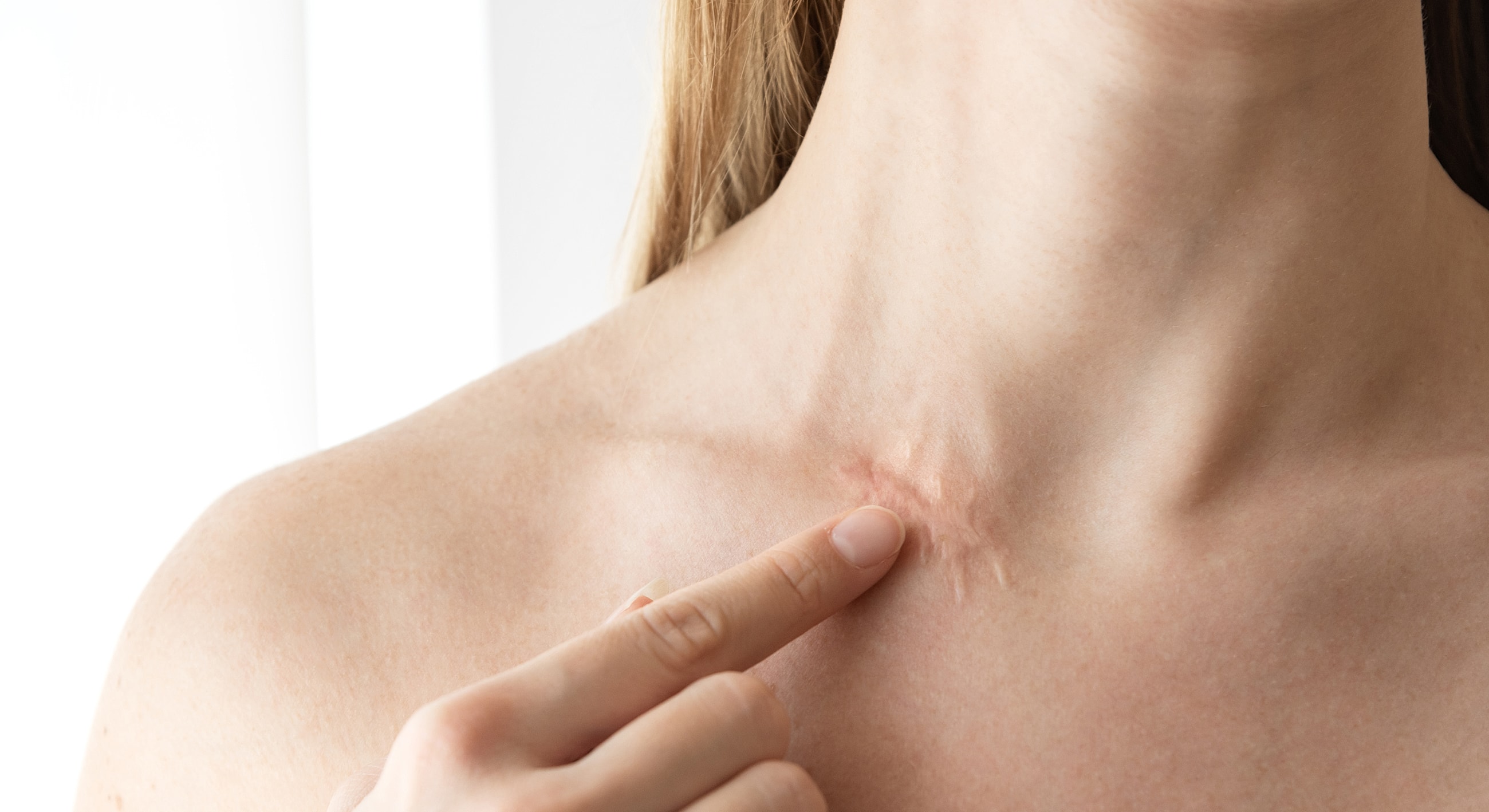
Scars are the body's natural healing response to skin damage, forming fibrous tissue to repair wounds. This process involves collagen deposition, creating a visible mark in healthy skin that differs in texture, color, and elasticity. Scars vary, including atrophic (depressed), hypertrophic (raised, red, itchy), keloid (raised, firm, extending beyond wound margins), and contracture (tightening, restricting movement, often from burns).
Beyond physical appearance, scars significantly impact patients psychologically and emotionally, leading to self-consciousness, anxiety, and reduced quality of life. Functional limitations can also occur. Understanding these diverse forms is vital for effective management.

Scar formation starts with dermal damage, triggering the skin's repair. New collagen fibers mend the wound, often less organized than original tissue. Factors like wound depth, location, and genetics influence this; high-tension areas are prone to prominent scars.
Infections, trauma, and certain medical conditions worsen scarring by delaying healing and increasing inflammation. Nutritional deficiencies and medications also impair wound quality. Complex interactions of cells, growth factors, and cytokines dictate scar characteristics.
Individual variations in healing are significant, with genetics predisposing some to hypertrophic or keloid scars. Skin type, age, and ethnicity also play a role; darker skin tones, for instance, have a higher keloid risk. Understanding these causes is crucial for prevention and treatment.
Meticulous wound care post-injury or surgery is crucial for scar prevention. This includes keeping wounds clean to prevent infection and maintaining a moist healing environment with occlusive dressings or petroleum jelly. Protecting wounds from tension or movement also prevents wider scars.
Dr. Bitter’s philosophy emphasizes proactive skin health and early intervention. Addressing potential scarring early, rather than waiting, is key. Silicone sheets or gels applied to new wounds reduce hypertrophic and keloid scar formation by providing hydration and gentle pressure. Avoiding direct sun exposure on healing wounds is vital, as UV radiation can cause hyperpigmentation.
Lifestyle and nutrition also support optimal healing. A balanced diet rich in vitamins C and Zinc aids collagen synthesis and immune function. Hydration and avoiding smoking are additional proactive measures. Early dermatological consultation for high-risk wounds enables timely interventions.
Dr. Patrick Bitter Jr., MD, revolutionized aesthetic dermatology, inventing the FotoFacial™ in 1998. His landmark 2000 study validated IPL efficacy, and his co-authored 2013 Stanford gene expression study proved Broadband Light (BBL) therapy reverses skin aging at a molecular level. With over 20,000 daily IPL/BBL procedures globally, Dr. Bitter's unparalleled expertise led to his recognition as an Aesthetic Medicine Icon in 2025.
ProFractional™ is an advanced ablative fractional laser that precisely targets microscopic skin channels, stimulating natural wound healing. It boosts collagen and elastin, resurfacing skin and improving scar texture, depth, and appearance. ProFractional offers significant scar revision with reduced downtime.
HALO® TRIBRID™ is the world's first triple-wavelength laser, combining ablative and non- ablative wavelengths for superficial and deeper scar concerns. This hybrid fractional laser offers customizable treatments, significantly improving scar texture, discoloration, and overall skin quality through dermal remodeling. It is effective for various scar types, including acne and surgical scars, with minimal discomfort.
BBL® HEROic™ (High Energy Rapid Output) is a cutting-edge broadband light therapy that effectively addresses scar discoloration, such as redness or hyperpigmentation. While not directly resurfacing, BBL HEROic's targeted light energy reduces inflammation and improves the overall tone and appearance of scarred tissue, making scars less noticeable. It is often combined with other resurfacing modalities for optimal scar management.
Dr. Bitter's LaserSense™ line uses Hypochlorous Acid (HOCl), a natural immune molecule, to support skin healing. His 2019 paper established HOCl as a gold standard for wound care and scar management, citing its antimicrobial, anti-inflammatory, and regenerative properties [4]. LaserSense products optimize skin repair and minimize complications.
For scars, LaserSense™ Dermal Spray cleanses, soothes, and protects compromised skin, fostering optimal healing. The LaserSense™ Post Procedure Gel provides crucial hydration and a protective barrier, supporting skin remodeling and reducing new scar appearance.
Alastin Skincare® features innovative TriHex Technology®, a blend of peptides and botanicals supporting the skin's natural production of healthy elastin and collagen. This technology clears damaged proteins, allowing skin to rebuild and rejuvenate, improving scar appearance and texture by promoting a more organized extracellular matrix.
For scars, Alastin Regenerating Skin Nectar enhances healing and improves scar appearance before, during, and after procedures. The Restorative Skin Complex with TriHex+™ aids scar improvement by promoting regeneration and reducing inflammation, leading to smoother, more even-toned skin. HA IMMERSE Serum provides deep hydration, vital for maintaining skin elasticity during scar remodeling, contributing to a softer, less noticeable scar texture.
[1] Bitter, P. (n.d.). About Dr. Patrick Bitter Jr., MD. Patrick Bitter Jr., MD. https://patrickbitterjrmd.com/about/
[2] Chang, A. L., et al. (2013). Noninvasive mechanical procedure for reversing photoaging: A gene expression study. Journal of Investigative Dermatology, 133(1), 262-264. https://pubmed.ncbi.nlm.nih.gov/22931923/
[3] Bitter, P., & Pozner, J. (2016). Acne Treatment with 3-Step Broadband Light Protocol. Journal of Drugs in Dermatology, 15(11), 1382-1386. https://jddonline.com/articles/acne-treatment- with-3-step-broadband-light-protocol-S1545961616P1382X
[4] Gold, M. H., et al. (2019). Hypochlorous Acid: A Novel Solution for Wound Care and Scar Management. Journal of Clinical and Aesthetic Dermatology, 12(12), 34-38. https://pubmed.ncbi.nlm.nih.gov/31904191/
[5] The Aesthetic Guide. (2026). From Peels to Protocols: The Modern Makeup of Cosmetic Dermatology. The Aesthetic Guide. https://www.theaestheticguide.com/aesthetic- dermatology/from-peels-to-protocols-the-modern-makeup-of-cosmetic-dermatology
[6] Sciton. (n.d.). A Revolutionary Breakthrough in Aesthetics: Meet the World’s Smartest Pulsed Light Device – BBL HEROic™. Sciton Blog. https://sciton.com/blog-a-revolutionary-breakthrough- in-aesthetics-meet-the-worlds-smartest-pulsed-light-device-bbl-heroic/
[7] Sciton. (n.d.). The World’s First and Only Triple Wavelength Laser is Changing Resurfacing Forever! Sciton Blog. https://sciton.com/blog-the-worlds-first-and-only-triple-wavelength-laser- is-changing-resurfacing-forever/
[8] Alastin Skincare. (n.d.). Regenerating Skin Nectar. https://alastin.com/products/regenerating-skin-nectar
[9] Alastin Skincare. (n.d.). Restorative Skin Complex with TriHex+™. https://alastin.com/products/restorative-skin-complex-with-trihex-plus
[10] Alastin Skincare. (n.d.). HA IMMERSE Serum. https://alastin.com/products/ha-immerse- serum