Acne Scar Treatment in Los Gatos, CA
Serving Campbell, Saratoga, San Jose, and Silicon Valley

Serving Campbell, Saratoga, San Jose, and Silicon Valley
Acne Scars: Comprehensive Condition Guide & Treatment Protocols
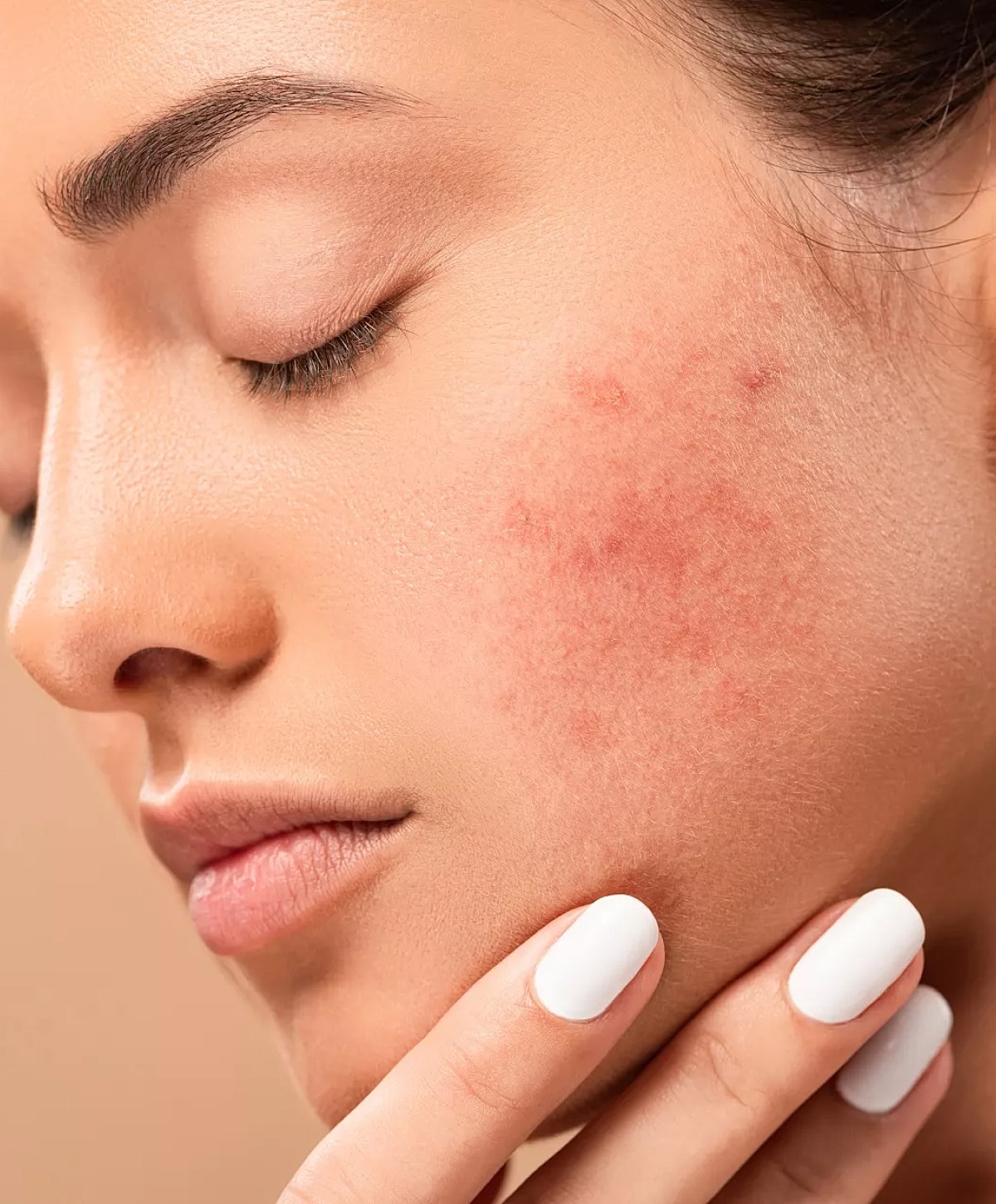
Acne scars are the visible, lasting textural and pigmentary changes that remain on the skin after severe or prolonged acne breakouts have healed. Unlike temporary post-inflammatory hyperpigmentation (PIH) or erythema (PIE)—which are flat red or brown marks that fade over time—true acne scars represent permanent alterations to the skin's dermal structure.
Acne scars generally fall into two primary categories:
For many patients, acne scars are not just a physical condition but an emotional one, significantly impacting self-esteem and confidence. As Dr. Patrick Bitter notes in his clinical research, addressing acne and its subsequent scarring requires a comprehensive, multi-modal approach to restore both the skin's health and the patient's confidence [1].

Acne scars result from the body's inflammatory response to acne lesions, particularly deep cysts and nodules. When a pore becomes engorged with excess sebum, dead skin cells, and Propionibacterium acnes (P. acnes) bacteria, it swells, causing a break in the follicle wall. If the rupture occurs near the skin's surface, the lesion usually heals quickly. However, if there is a deep break in the follicle wall, infected material spills into the surrounding dermis, destroying healthy skin tissue and creating a deep lesion.
To repair the damage to the dermis, the skin forms new collagen fibers. If the body produces too little collagen during this repair process, a depression or atrophic scar forms. Conversely, if the body overproduces collagen, a raised hypertrophic scar develops. The severity of the scarring is often directly correlated to the severity and duration of the underlying inflammation [1].
The most effective way to manage acne scars is to prevent them from forming in the first place. Dr. Bitter emphasizes a proactive approach to skin health to minimize long-term damage:
When it comes to treating acne scars, Dr. Patrick Bitter is not just a practitioner; he is the pioneer who fundamentally changed the landscape of cosmetic dermatology. In 1998, when Intense Pulsed Light (IPL) was on the verge of being abandoned by the medical community, Dr. Bitter invented the FotoFacial™, introducing the first full-face IPL treatment protocol to the world [2].
He published the landmark 2000 study that legitimized IPL, and later, his groundbreaking 2013 Stanford University study proved that Broadband Light (BBL) actually reverses the gene expression of aged skin at a molecular level [3]. Today, over 20,000 IPL/BBL procedures are performed worldwide each day—all tracing back to his original innovations [2]. Recently honored as an Aesthetic Medicine Icon in 2025, Dr. Bitter continues to lead the industry by directly developing protocols for Sciton's newest technologies [4].
To treat acne scars, Dr. Bitter utilizes a sophisticated "stacking" approach (ScitonStaX™) to address both the pigmentary and textural components of scarring:
For active acne and the post-inflammatory erythema (redness) or hyperpigmentation (brown spots) associated with scars, BBL HEROic is unmatched. Dr. Bitter collaborated directly with Sciton to develop the SkinSmooth 640S filter for this exact device [5].
The newest breakthrough in resurfacing, the HALO TRIBRID is a powerhouse for acne scar revision. It is the world's first triple-wavelength resurfacing laser (2940 nm, 1470 nm, and 1927 nm) delivered in a synchronized pass [6].
For severe, deep atrophic scars (particularly deep boxcar and ice pick scars), the Sciton ProFractional laser is utilized. It creates micro-channels deep into the dermis, stimulating a robust wound-healing response and massive collagen production to push the scar up from the inside out. It is frequently stacked prior to a HALO treatment for optimal smoothing [7].
To maximize the results of advanced laser modalities and support the skin's healing process, proper pre- and post-procedure skincare is mandatory.
As a leading researcher in wound healing, Dr. Bitter co-authored the 2019 landmark paper establishing topical stabilized hypochlorous acid (HOCl) as the "future gold standard for wound care and scar management" [8]. Based on this science, his practice offers his proprietary LaserSense™ line:
Alastin products feature patented TriHex Technology®, which clears out damaged collagen and elastin while supporting the skin's natural ability to produce new, healthy tissue—a critical mechanism for filling in acne scars.
[1] Bitter, P. (2016). Acne Treatment With 3-Step Broadband Light Protocol. Journal of Drugs in Dermatology, 15(11), 1382-1388. https://jddonline.com/articles/acne-treatment-with-3-step- broadband-light-protocol-S1545961616P1382X
[2] Bitter, P. (2026). About Dr. Patrick Bitter Jr. MD: Pioneer of FotoFacial & IPL. https://patrickbitterjrmd.com/about/
[3] Chang, A. L. S., Bitter, P., et al. (2013). Rejuvenation of Gene Expression Pattern of Aged Human Skin by Broadband Light Treatment: A Pilot Study. Journal of Investigative Dermatology. https://pubmed.ncbi.nlm.nih.gov/22931923/
[4] Hilton, L. (2026). From Peels to Protocols: The Modern Makeup of Cosmetic Dermatology. The Aesthetic Guide. https://www.theaestheticguide.com/aesthetic-dermatology/from-peels- to-protocols-the-modern-makeup-of-cosmetic-dermatology
[5] Sciton. (2025). You’ve Been Matched! Why BBL® HEROic™ is the Perfect Fit for Your Practice. https://sciton.com/blog-youve-been-matched-why-bbl-heroic-is-the-perfect-fit-for-your- practice/
[6] Sciton. (2025). The World’s First and Only Triple-Wavelength Laser Is Changing Resurfacing Forever. https://sciton.com/blog-the-worlds-first-and-only-triple-wavelength-laser-is-changing- resurfacing-forever/
[7] Sciton. (2024). Discover Sciton’s Advanced Acne & Acne Scars Solutions. https://sciton.com/blog-acne-awareness-month-discover-scitons-advanced-acne-acne-scars- solutions/
[8] Gold, M. H., Andriessen, A., Bhatia, A. C., Bitter, P., et al. (2020). Topical stabilized hypochlorous acid: The future gold standard for wound care and scar management in dermatologic and plastic surgery procedures. Journal of Cosmetic Dermatology. https://pubmed.ncbi.nlm.nih.gov/31904191/